
 New Arrivals →
 Best Sellers →
 Work Boots →
 Work Shoes →
 Men's Safety →
 CSA Approved →

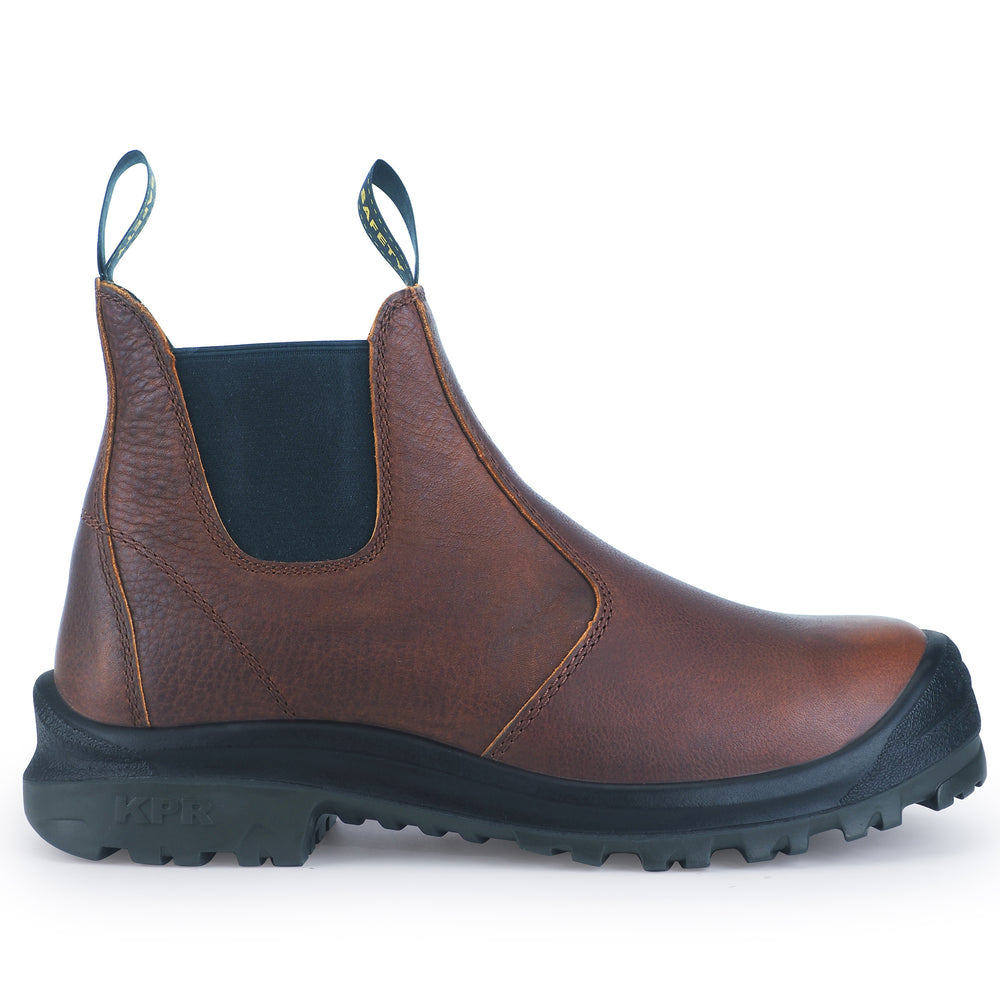
M706
CSA Approved · ESR positioningKPR M706 Steel Toe Chelsea Work Boots - Brown
CA$139.99
Steel Toe
Puncture Resistant
Waterproof
View M706 →
Compare pull-on KPR Chelsea safety-boot profiles by toe type, fit, materials and protection before choosing the right model.
2 products
 SHOP BY JOB · CONFIRM BY MODEL
M706
CSA Approved · ESR positioning

M706
CSA Approved · ESR positioningUse the job to narrow the range, then verify the exact model before purchase.

Compare exact-model toe protection, underfoot protection, traction, water protection and fit for the work being performed.
Explore Construction →
Browse lower- and higher-coverage profiles, then confirm the required protection and fit for each role.
Explore Warehouse & Logistics →
Compare water-protection language, tread, coverage and documented protection without assuming every model is the same.
Explore Outdoor Work →Start with the workplace hazard assessment and local requirements. Then compare the exact model for protection, fit, construction and documented markings.
Identify the applicable workplace requirement and read the complete marking on the exact model.
Safety standards → 02 · PROTECTIONSeparate safety-toe, puncture, electrical and water-protection categories instead of treating them as interchangeable.
Explore protection → 03 · FITMeasure both feet, use the model size information and confirm room for the intended work sock.
Size & fit guide → 04 · WORKPLACECompare floor conditions, weather exposure, movement, standing time and site-specific hazards.
Work & job guides →A collection page helps narrow the range, but it does not prove that every model carries the same protective features. Check the exact product page, markings and available documentation before purchase.
All KPR footwear uses DESMA direct-injection construction. Outsole material, tread, water-protection language and other model details can still vary, so compare the fields recorded for the exact model.
B2B buyers can organize footwear selection by job role, required protection, approved models, fit trials and replacement planning instead of selecting one boot for every worker and environment.
Start with the employer hazard assessment, applicable jurisdiction and job requirements. Then confirm that the exact model documents the required protection and fit.
No. Steel and nonmetallic composite toe caps differ in material and product construction. The correct choice depends on the required standard, workplace policy and exact-model evidence.
No. Water protection is model-specific. Read the exact product description and documentation, and do not infer a waterproof claim from appearance alone.
Define job roles, required protection, fit and approved models first. Use a fit trial where practical, then document ordering, replacement and model-verification rules.