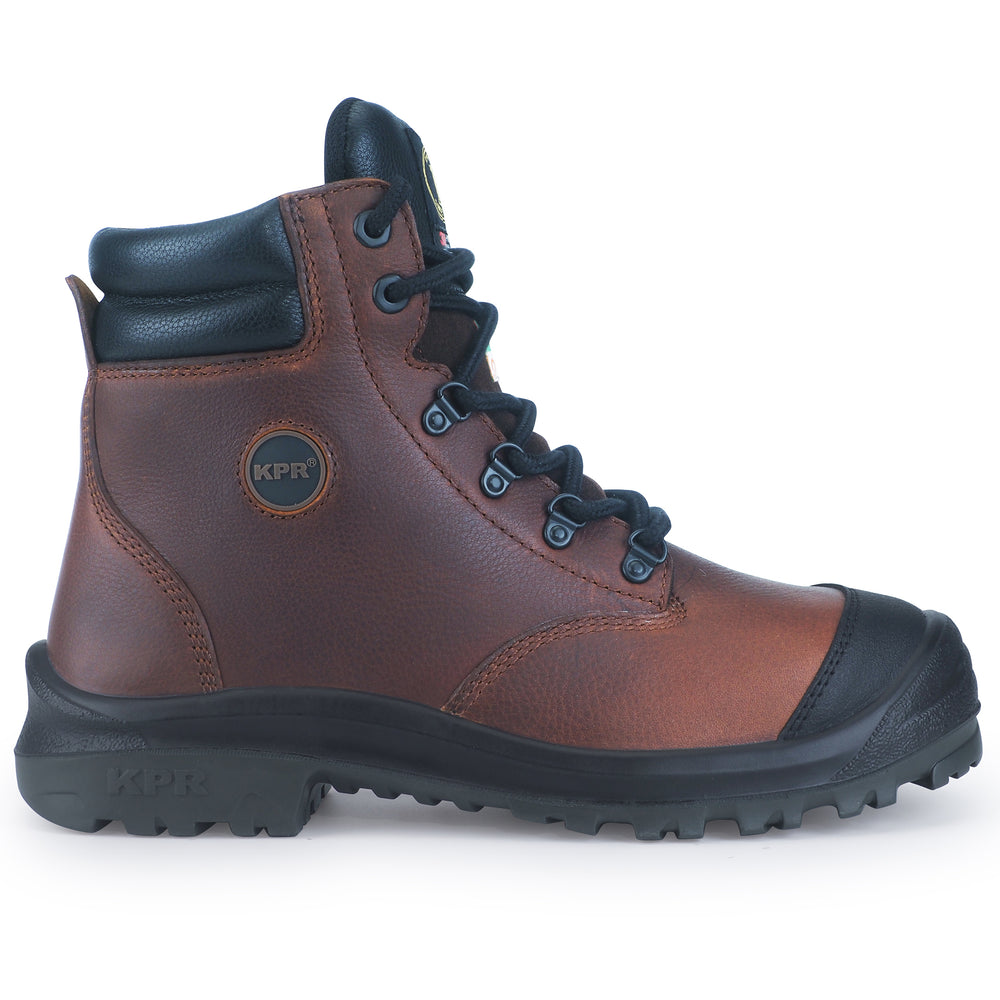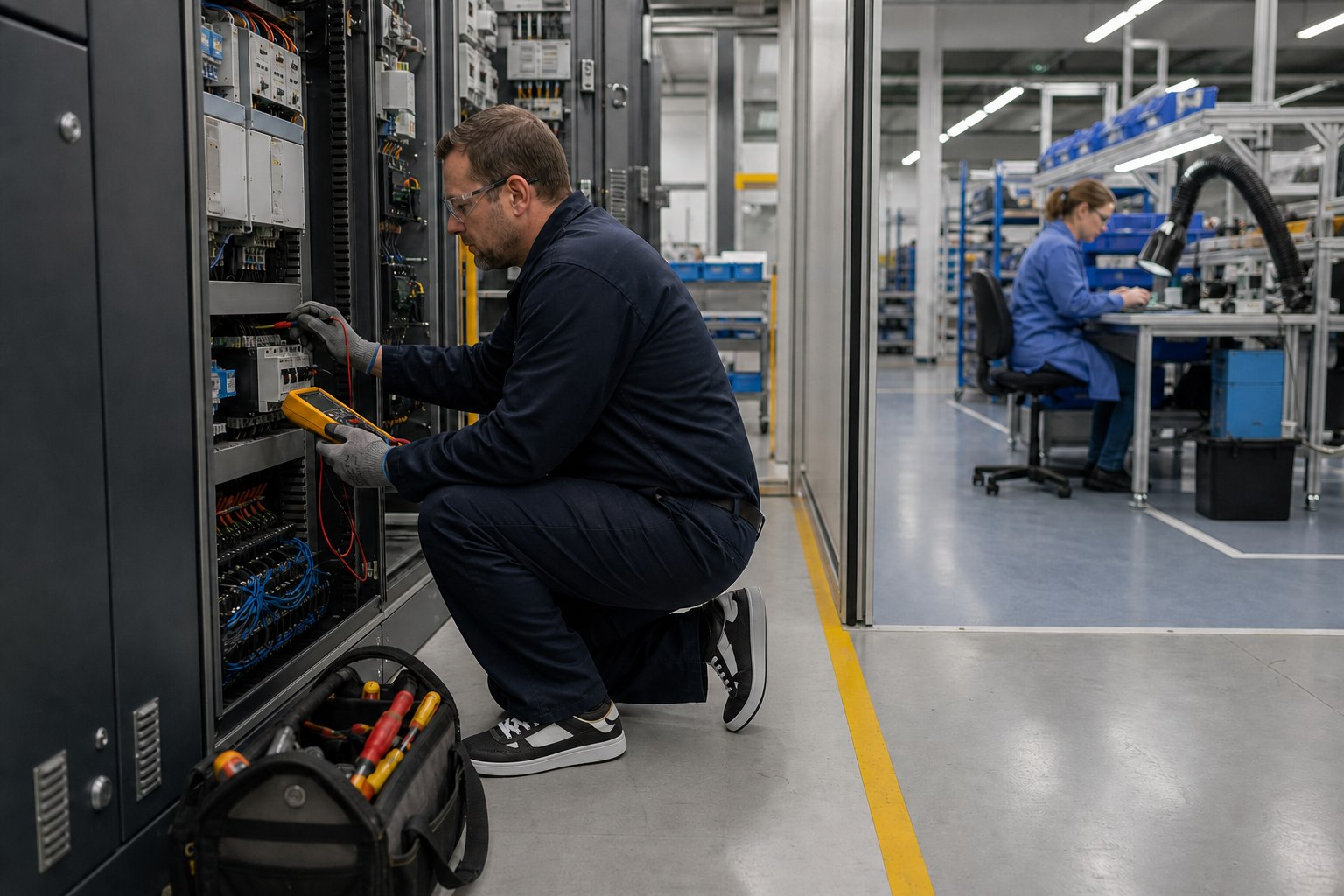
Separate the terms by purpose
Electrical-work footwear cannot be chosen from a generic electrical label. The workplace may require secondary electrical-shock protection, static dissipation, electrostatic-discharge control, conductive footwear or another system.
| Term | General purpose | Critical boundary |
|---|---|---|
| EH | U.S. electrical-hazard designation for secondary protection under specified accidental-contact conditions. | It does not authorize contact with energized conductors. |
| ESR | Canadian electric-shock-resistant terminology associated with the applicable marking. | Verify the Canadian requirement and symbol on the exact pair. |
| SD | Static-dissipative footwear controls resistance to reduce excessive charge buildup. | It is not the same category as EH shock protection. |
| ESD | Electrostatic-discharge control within a defined people, product or equipment protection program. | Confirm the test method and required system resistance. |
| Conductive | Rapid dissipation of static charge in specified hazardous environments. | Never treat conductive footwear as live-conductor protection. |
Identify the electrical or static hazard first
- Is the concern accidental electric shock, static buildup, sensitive equipment or ignition risk?
- Which jurisdiction, standard, edition and permanent marking does the workplace require?
- Which other controls are part of the electrical or static-control procedure?
- Which floor, grounding, sock, insole and wearer conditions affect the system?
Electrical-hazard footwear is secondary protection
EH or applicable electric-shock-resistant footwear must be used within the conditions covered by the relevant standard and workplace procedure. It does not replace de-energization, insulation, safe work practices, training or other required PPE.
Metal-free construction, a nonmetallic toe or a rubber-looking outsole does not prove any electrical designation. Confirm the permanent marking and controlled record for the exact model.
Static-control footwear belongs to a complete system
- Hazard and objective: identify the static risk and the people, products or equipment being protected.
- Jurisdiction and standard: record the precise designation and test method.
- Performance range: confirm the required resistance or discharge behavior.
- Exact footwear: match model, SKU, permanent marking and current document.
- System compatibility: confirm approved socks, insoles, floor, grounding and wearer practices.
Condition and maintenance affect performance
Moisture, contamination, sole wear, damage, aftermarket inserts and changes to floor conditions can alter the electrical path. Inspect and test at the interval established by the workplace program, and remove footwear that is damaged or outside its action limits.
Procurement checklist
- Work area, task and electrical or static-control objective.
- Required standard, designation and test method.
- Required resistance or performance range.
- Exact model, SKU, configuration and permanent marking.
- Approved floor, grounding, socks and footbeds.
- Incoming inspection, periodic testing and replacement criteria.
Canadian reference
For Canadian Omega, SD and C terminology, compare the exact marking with the current CCOHS Safety Footwear reference.