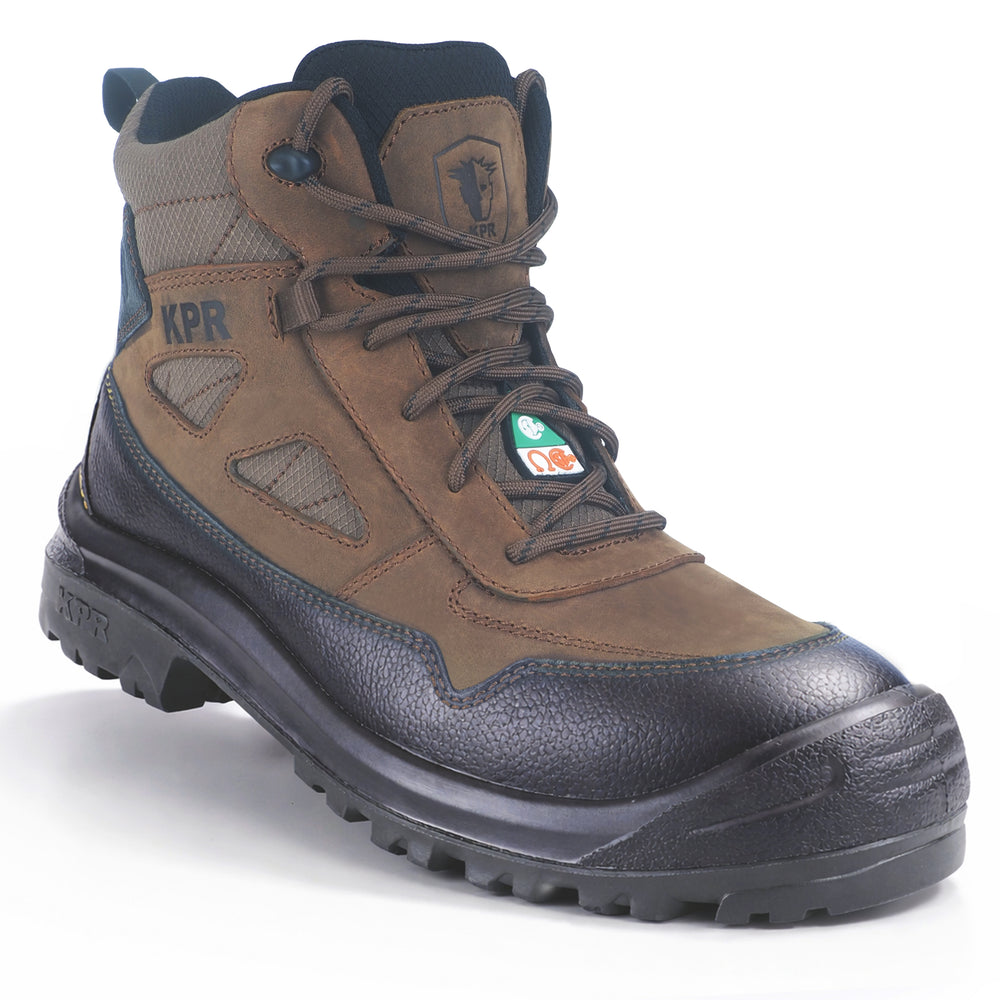
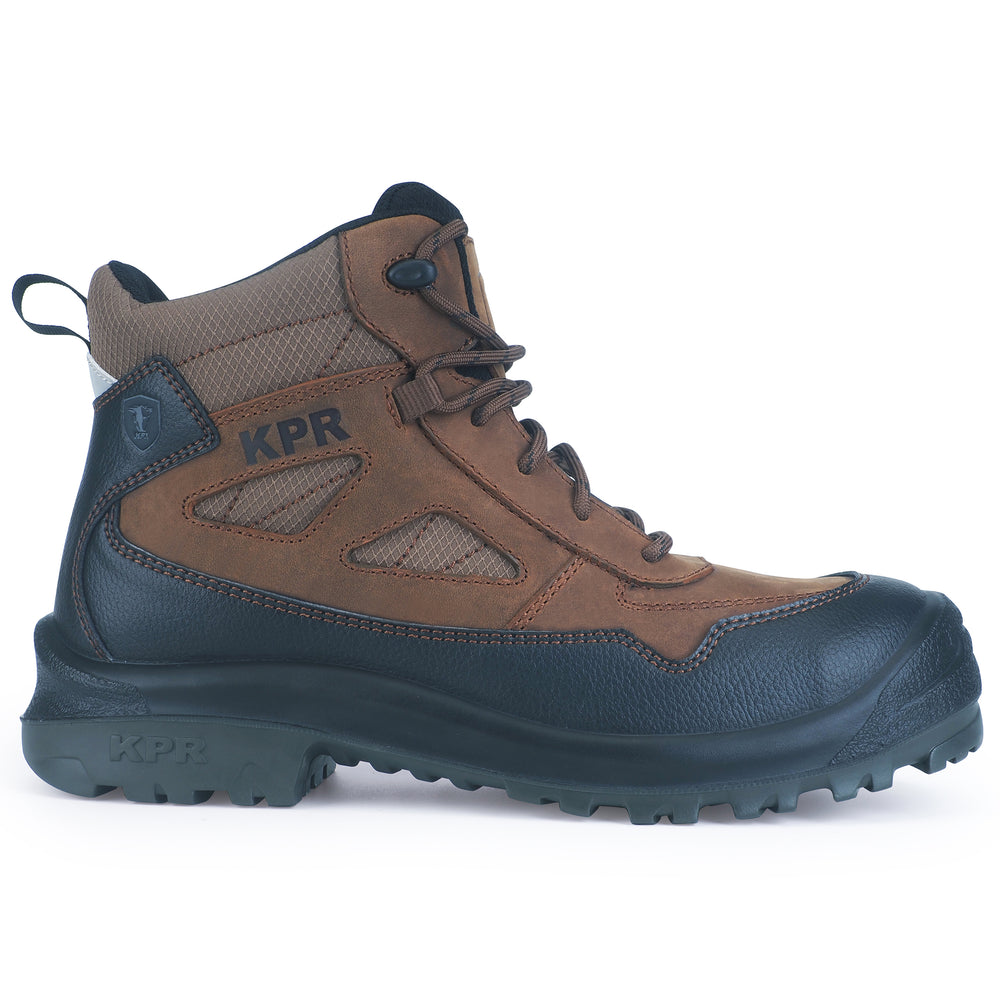
Read the full marking, not one familiar code
An ASTM footwear label is a model-specific record. Begin with the standard and edition, then read the complete sequence of protection categories. The position and format can vary by edition, so use the applicable standard and the product documentation together.
Common codes answer different questions
| Code | Protection idea | What to verify |
|---|---|---|
| I/75 | Toe-area impact resistance rating | The complete marking, standard edition and exact model. |
| C/75 | Toe-area compression resistance rating | The rating shown for the precise configuration being purchased. |
| Mt | Metatarsal protection for the upper foot | Presence and rating where the workplace requires it. |
| EH | Electrical-hazard protection for specified accidental-contact conditions | Exact designation, standard, condition and workplace electrical procedure. |
| SD | Static-dissipative properties | Required resistance category and the static-control program. |
| PR | Puncture resistance of the footwear bottom | Underfoot marking and exact-model documentation. |
A repeatable six-step reading sequence
- Identify the standard. Record the ASTM document printed or documented for the model.
- Identify the edition. Keep the year suffix with the standard number.
- Read toe ratings. Confirm impact and compression information rather than assuming a safety toe covers every hazard.
- Read optional categories separately. Metatarsal, puncture, electrical and static-control claims answer different questions.
- Match the exact product. Confirm SKU, colour and configuration instead of relying on a similar family name.
- Match the workplace. Compare every required category with the employer hazard assessment and purchasing specification.
Common reading errors
- Treating “composite toe” or “steel toe” as proof of the tested rating.
- Assuming a protective toe automatically includes puncture resistance.
- Reading EH and SD or ESD as interchangeable electrical claims.
- Using a slip test reference as a promise that footwear is slip-proof on every surface.
- Using one model's marking for another colour, width or configuration without controlled evidence.
When to request more documentation
Stop and request the current model record when the permanent marking is incomplete, unreadable or inconsistent with a sales description; when the required edition differs from the cited edition; or when the workplace needs a category that is not clearly present. Do not fill gaps with assumptions.
Related guides
Use ASTM Safety Footwear Standards: F2412, F2413 and Related Tests to understand the role of each document. For electrical terminology, open EH, SD, ESD & ESR Safety Footwear. Return to the ASTM markings overview.