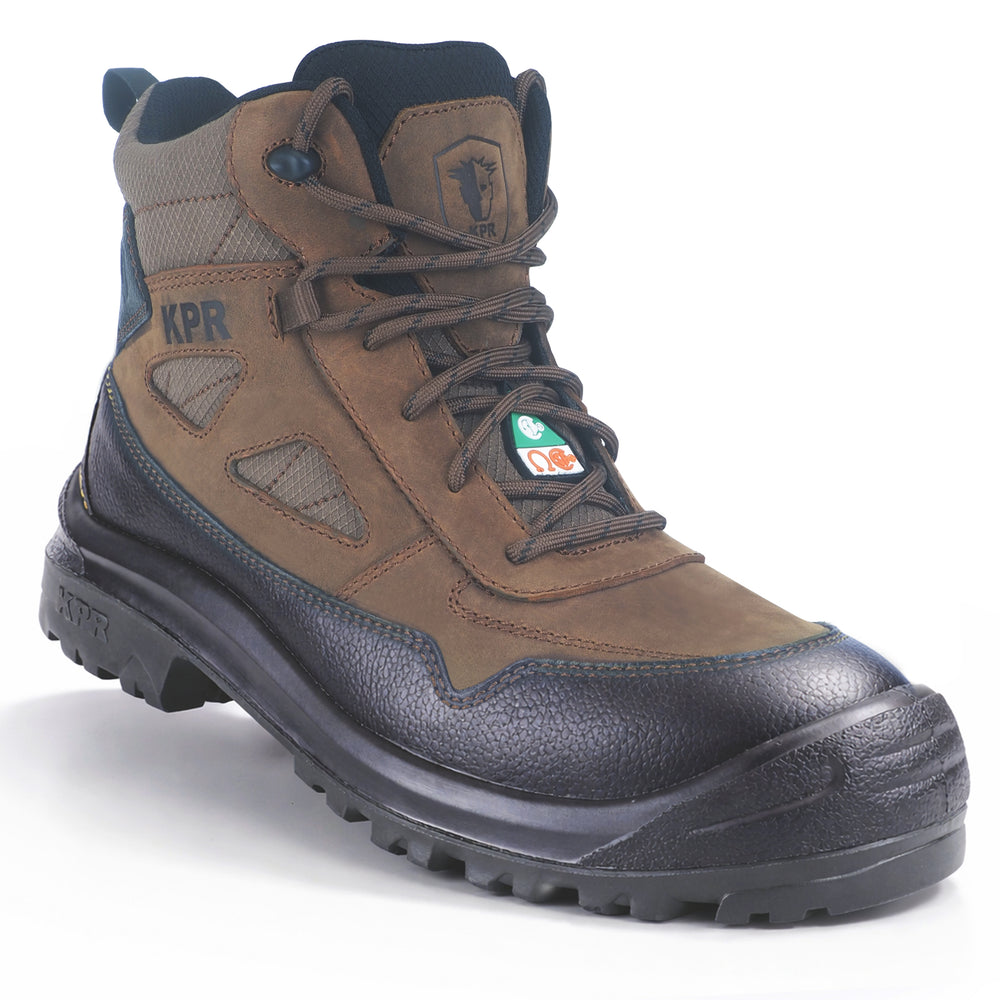
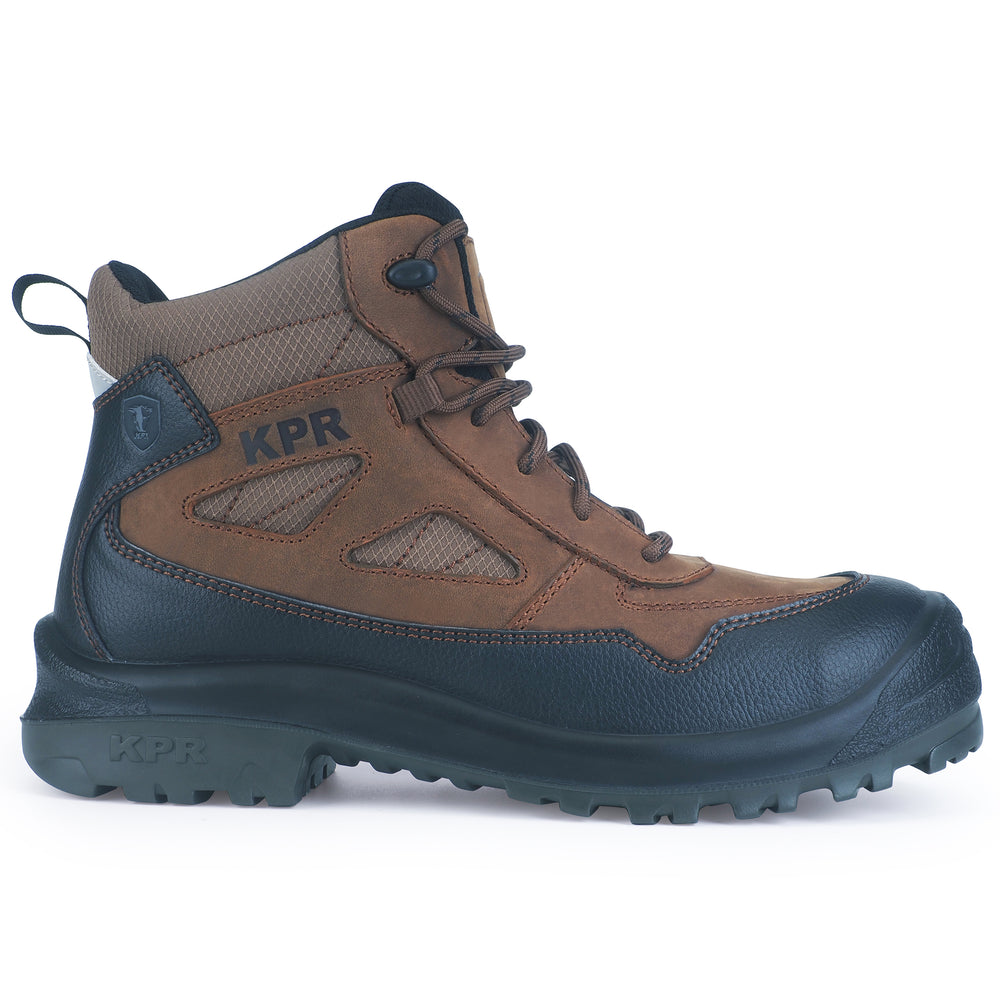
Cleaning safety boots is not only about appearance. Dirt packed into outsole grooves can reduce tread effectiveness, dried mud can hold moisture against the upper, and heavy contamination can hide damage that should be inspected before the next shift.
1. Let heavy mud dry first
If the boots are covered in mud, allow the surface dirt to dry before brushing. Trying to scrub thick wet mud immediately can spread it deeper into seams and textured leather.
2. Remove loose dirt
Use a soft brush to clean the upper, welt area and outsole. Pay attention to the flex zone and the edge where the upper meets the sole. For outsole lugs, use a firmer brush or a blunt tool that will not cut the rubber.
3. Clean the leather gently
For smooth or full-grain leather, use a damp cloth or soft sponge with a mild cleaner that is suitable for the material. Do not saturate the boot. Work in small sections and wipe away residue with a clean damp cloth.
4. Air dry — do not cook the boot
Remove the insoles if they are removable and loosen the laces so air can circulate. Let the boots dry naturally in a ventilated area. Avoid radiators, heat guns and high-temperature hair dryers. Strong direct heat can dry leather too quickly and may affect finishes or construction materials.
5. Condition only when the leather needs it
After the boot is fully dry, a compatible leather conditioner can help maintain flexibility. Use a small amount and test it on an inconspicuous area first, because conditioners can change the color or finish of some leathers.
6. Inspect before the next shift
Cleaning is the best time to look for damage. Check the outsole for cuts or severe wear, the upper for deep cracks, the toe area for impact damage, and the bond or molded junction between the upper and sole for separation.
Avoid one-cleaner-for-everything thinking
Leather, suede, nubuck, textile and coated materials need different care. If you are unsure what your KPR model uses, check the product page or contact KPR before applying a strong chemical cleaner, wax or solvent.
For wet-condition care, continue with How to Care for Water-Resistant Work Boots After Wet Shifts.